


Browse the Knowledge Hub211 resources
Working Effectively with Legacy Code: is it worth reading?
How to get untested code under test, which is the situation almost every real codebase is actually in.
We earn nothing from any link on this page. No affiliate links anywhere in this library.
- published
- 2004
- key ideas
- 3
- reading path
- 1

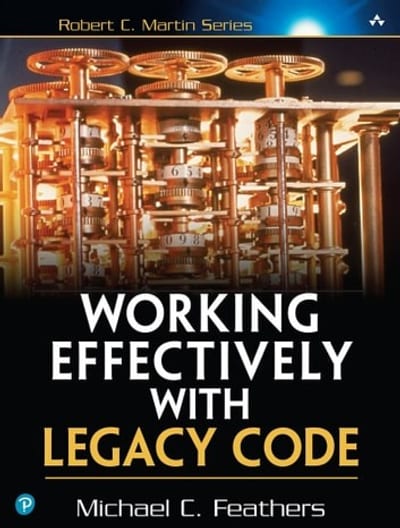
Working Effectively with Legacy Code
by Michael C. Feathers
- Publisher
- Prentice Hall
- Year
- 2004
- ISBN
- 9780132931755
Useful when you are: Practising tester, Senior / lead
Verdict
Should you read it?
Read it if
You work on a system you did not write that has little or no test coverage. That is most people, and this book is the single most useful thing they could read.
Skip it if
You work exclusively greenfield, which almost nobody does for long.
If you only read one thing
The chapter on characterisation tests. It is the technique that unblocks people most often, and it can be applied the day you read it.
The argument
What it argues
Feathers defines legacy code as code without tests, which is a deliberately provocative definition and a useful one: it makes the problem tractable rather than a matter of age or style.
The central difficulty is circular. To change code safely you need tests; to write tests you usually need to change the code to make it testable. The book is essentially a catalogue of techniques for breaking that cycle: seams where behaviour can be intercepted, dependency-breaking techniques, and characterisation tests that document what the code currently does rather than what it should.
It is the most practically useful book on this list for anyone working on an existing system, which is almost everyone.
Key ideas
Ideas worth taking from it
- 01
Legacy code is code without tests
A definition that reframes the problem from a quality judgement into a tractable engineering task.
- 02
Seams
A place where behaviour can be changed without editing in that place. The conceptual tool that makes dependency breaking systematic rather than ad hoc.
- 03
Characterisation tests
Tests that capture what the code currently does, including its bugs, so you can refactor safely. You are not asserting correctness, you are pinning behaviour.
Criticism
What has dated, and what it gets wrong
The examples are predominantly Java and C plus plus, and some dependency-breaking techniques are unnecessary in languages with better testing tooling or in codebases using dependency injection throughout. It is also long, and reads as a catalogue rather than a narrative. Still worth it.
Reading paths
On our reading paths
Becoming an automation engineer
Book 4 of 5 · Automation and SDET
Most automation work happens on code that was never written to be tested. This is the manual for breaking dependencies safely so tests can go in.
 1. Test Driven Development: By Example
 2. Unit Testing Principles, Practices, and Patterns
 3. Growing Object-Oriented Software, Guided by Tests
- 4. Working Effectively with Legacy Code (this book)
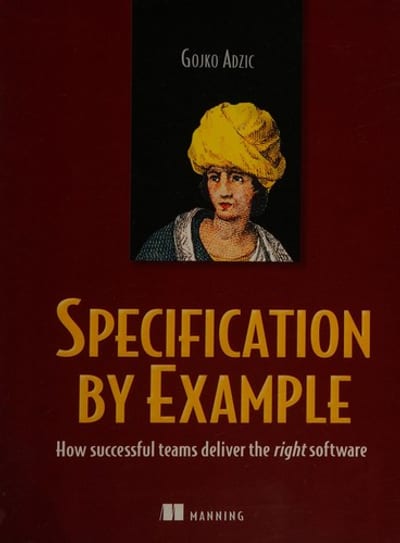 5. Specification by Example
Keep reading
What to read next
Reading about quality is cheaper than learning it in production.
QAble runs QA for products in BFSI, gaming, healthcare and SaaS, with engineers who have read these and argued about them. Start with a free QA audit.