


Browse the Knowledge Hub211 resources
Systems Performance: is it worth reading?
The definitive reference on diagnosing performance at the operating system level, and the source of the USE method.
We earn nothing from any link on this page. No affiliate links anywhere in this library.
- published
- 2020
- key ideas
- 3
- reading path
- 1

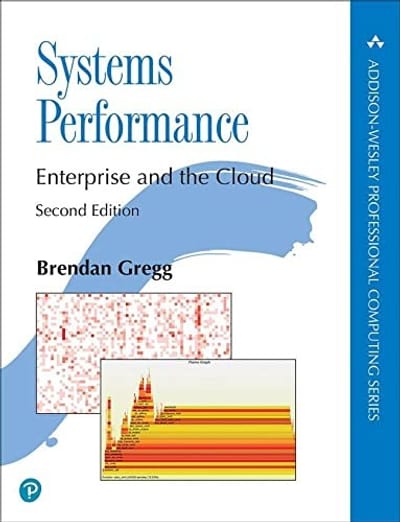
Systems Performance
Enterprise and the Cloud
by Brendan Gregg
- Publisher
- Addison-Wesley
- Year
- 2020
- Edition
- Second edition, substantially updated for cloud and BPF tooling.
- ISBN
- 9780136820154
Useful when you are: Senior / lead
Verdict
Should you read it?
Read it if
You do performance engineering and the bottleneck analysis stops at the number. It is the book that takes you from the system is slow to this specific resource is saturated.
Skip it if
You run load tests and hand the results to someone else. It is deep, technical and Linux-focused.
The argument
What it argues
Gregg provides a systematic methodology for performance analysis rather than a collection of tips. The core is the USE method: for every resource, check utilisation, saturation and errors. It is a checklist that reliably finds the constraint rather than a search for the thing you happen to suspect.
The book then goes deep on each subsystem: CPU, memory, file systems, disks, networking, with the tooling to observe each on Linux.
For performance testers the value is in what happens after the load test reports a problem. Most performance testing stops at a measurement; this book is about turning a measurement into a diagnosis.
Key ideas
Ideas worth taking from it
- 01
The USE method
Utilisation, saturation and errors for every resource. Saturation is the one teams do not collect, and it is usually the earliest indicator because queueing begins before utilisation reaches its ceiling.
- 02
Latency as the primary metric
Latency is directly connected to user experience in a way throughput and utilisation are not, so it should anchor the analysis.
- 03
Observability over guesswork
Performance work should be driven by instrumentation and methodology, not by changing settings and seeing what happens.
Criticism
What has dated, and what it gets wrong
Very long and genuinely demanding, with a great deal of Linux kernel detail that is irrelevant to anyone not doing kernel-level analysis. It is a reference rather than a read-through, and the methodology chapters carry most of the value for a tester.
Reading paths
On our reading paths
Performance and reliability
Book 3 of 4 · Performance testing
The reference for analysing performance at the operating system level: finding the bottleneck rather than only reporting that a response was slow.
 1. Release It!
 2. Designing Data-Intensive Applications
- 3. Systems Performance (this book)
 4. Site Reliability Engineering
Keep reading
What to read next
Reading about quality is cheaper than learning it in production.
QAble runs QA for products in BFSI, gaming, healthcare and SaaS, with engineers who have read these and argued about them. Start with a free QA audit.