


Browse the Knowledge Hub211 resources
How Google Tests Software: is it worth reading?
An account of Google dissolving the separate QA function into engineering roles, and what that actually required.
We earn nothing from any link on this page. No affiliate links anywhere in this library.
- published
- 2012
- key ideas
- 3
- reading path
- 1

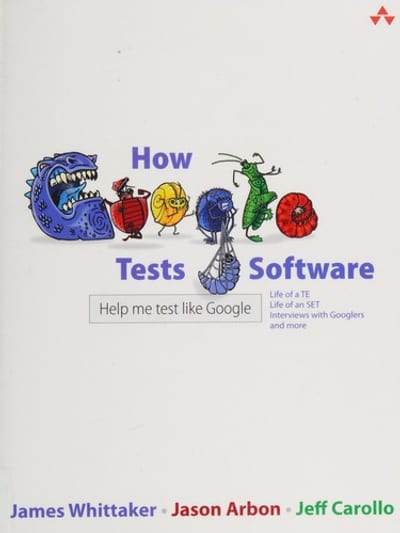
How Google Tests Software
by James Whittaker, Jason Arbon, Jeff Carollo
- Publisher
- Addison-Wesley
- Year
- 2012
- ISBN
- 9780321803023
Useful when you are: Senior / lead, Manager
Verdict
Should you read it?
Read it if
You are being asked to justify or dismantle a separate QA function and want a detailed account of what the alternative actually involves rather than a slogan about it.
Skip it if
You are looking for practice you can adopt directly. Very little of it transfers to an organisation without Google engineering culture, infrastructure and hiring bar.
The argument
What it argues
Google replaced a traditional QA department with engineers who build testing infrastructure, describing roles as Software Engineer in Test and Test Engineer rather than tester. The argument is that quality is a development concern and that the most valuable thing a testing specialist can do is build the tooling that lets developers test their own work well.
The book describes the small-medium-large test taxonomy rather than unit-integration-end-to-end, the risk analysis approach used to decide what gets attention, and the organisational structure that supported it.
It is most valuable as a description of what a particular model costs, which is substantial engineering investment and a developer population willing to own testing.
Key ideas
Ideas worth taking from it
- 01
SET and TE roles
Separating the engineer who builds test infrastructure from the engineer who assesses product risk, with both being engineering roles rather than a QA department.
- 02
Small, medium, large tests
Classification by scope and resource access rather than by the unit, integration and end-to-end vocabulary, which turns out to be more actionable for deciding where a test belongs.
- 03
Quality is a development concern
The position that a separate function cannot produce quality, only measure it, and that the testing specialism is best spent enabling developers.
Criticism
What has dated, and what it gets wrong
The most frequently over-applied book on this list. Teams read it, remove their testers, and discover that the model depends on an enormous tooling investment and a developer population that genuinely tests, neither of which they have. It is also dated: it describes Google in roughly 2011, and Google has changed the model since. Read it as a case study, not a template.
Reading paths
On our reading paths
From tester to test lead
Book 4 of 5 · Moving into a lead role
Testing as an engineering discipline at very large scale. Read it for the role definitions and test planning ideas, knowing that few organisations look like Google.
 1. Perfect Software
 2. More Agile Testing
 3. Fifty Quick Ideas to Improve Your Tests
- 4. How Google Tests Software (this book)
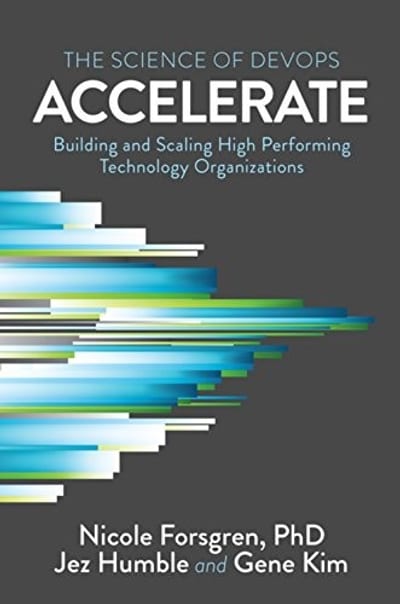 5. Accelerate
Keep reading
What to read next
Reading about quality is cheaper than learning it in production.
QAble runs QA for products in BFSI, gaming, healthcare and SaaS, with engineers who have read these and argued about them. Start with a free QA audit.