


Browse the Knowledge Hub211 resources
Accelerate: is it worth reading?
The research establishing that delivery speed and stability rise together, and the source of the four key metrics.
We earn nothing from any link on this page. No affiliate links anywhere in this library.
- published
- 2018
- key ideas
- 3
- reading paths
- 2

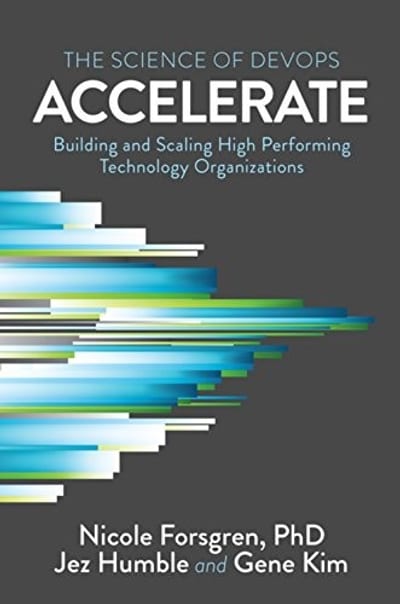
Accelerate
The Science of Lean Software and DevOps
by Nicole Forsgren, Jez Humble, Gene Kim
- Publisher
- IT Revolution
- Year
- 2018
- ISBN
- 9781942788379
Useful when you are: Senior / lead, Manager
Verdict
Should you read it?
Read it if
You need evidence rather than opinion to argue for automation investment or against a manual release gate. It is the most citable book on this list.
Skip it if
You want implementation guidance. It tells you what correlates with high performance, not how to build it.
The argument
What it argues
Drawing on several years of survey research, the authors identify capabilities that statistically predict software delivery performance, measured through four metrics: deployment frequency, lead time for changes, change failure rate and time to restore service.
The headline finding is that speed and stability are not a trade-off. High performers deploy more frequently and have lower change failure rates, which contradicts the assumption underlying most release governance, including most testing gates.
For a quality function this is the most useful evidence available, because it reframes the argument. Heavy manual gating correlates with worse outcomes on both axes, which is a far stronger case for automation than any appeal to principle.
Key ideas
Ideas worth taking from it
- 01
The four key metrics
Deployment frequency, lead time for changes, change failure rate, time to restore. Now the standard DORA measures, used across the industry.
- 02
Speed and stability move together
The central empirical finding, and the one that undermines the assumption that slowing down releases makes them safer.
- 03
Continuous delivery capabilities
Trunk-based development, comprehensive test automation and test data management are among the practices that statistically predict performance.
Criticism
What has dated, and what it gets wrong
Survey-based and self-reported, so it establishes correlation rather than causation, a limitation the authors acknowledge and readers routinely ignore. The four metrics have also been widely gamed since publication, with organisations optimising deployment frequency by deploying trivial changes. The statistical chapters are heavy going for the intended audience.
Reading paths
On our reading paths
From tester to test lead
Book 5 of 5 · Moving into a lead role
The research a lead needs to argue for faster feedback and smaller releases with evidence rather than opinion.


Quality in continuous delivery
Book 3 of 5 · Delivery and DevOps
The research behind the four key delivery metrics, and the evidence that speed and stability are not a trade-off.
 1. The Phoenix Project
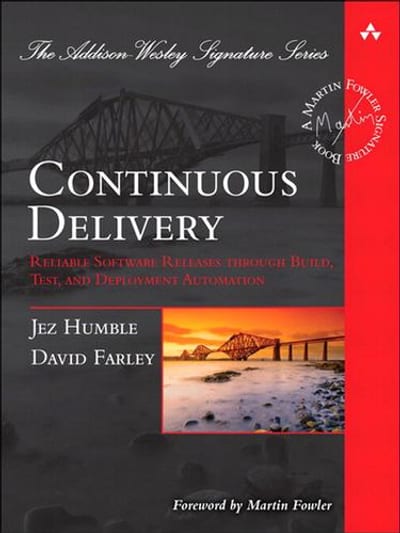 2. Continuous Delivery
- 3. Accelerate (this book)
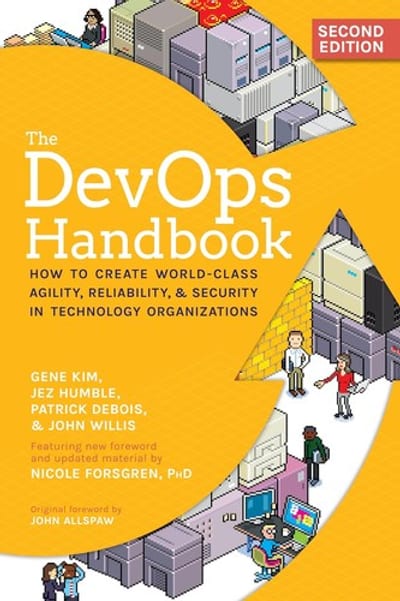 4. The DevOps Handbook
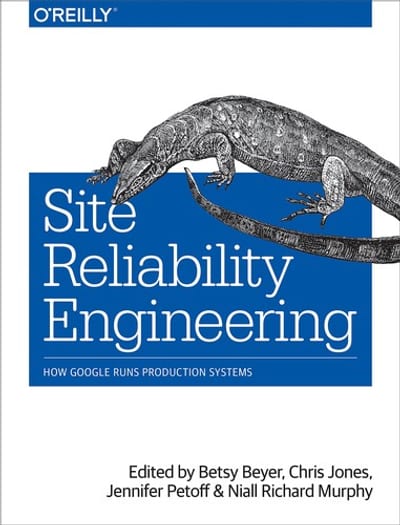 5. Site Reliability Engineering
Keep reading
What to read next
Reading about quality is cheaper than learning it in production.
QAble runs QA for products in BFSI, gaming, healthcare and SaaS, with engineers who have read these and argued about them. Start with a free QA audit.