


Software quality is no longer just a testing activity. It decides how fast you can release and how often a release has to be rolled back. As delivery cycles shorten and systems spread across more services, many teams find they cannot hold quality steady with an in-house team alone, so they look for a testing partner.
India and the USA are the two markets most buyers shortlist from, and two of the best-known names changed owner or brand in 2026. Most lists you will find have not caught up.
This guide does four things:
- Lists 12 software testing companies, each checked against its own website
- Sets out what each one offers and who it suits best
- Explains the five ways to engage a testing company, and who owns what in each
- Gives you the questions that separate a real partner from a good sales deck
If you are still deciding whether to outsource at all, start with our comparison of External QA vs. Internal QA.
How this list was built
Every fact about a company below comes from that company's own website, read on 13 October 2026. Where a company's site did not state a fact and we used its Clutch profile instead, we say so. Where a fact could not be found, we left it out rather than guess.
Three rules shaped the list:
- Serves clients in India, the USA or both, as the company itself publishes it
- Software testing as a core business, not one line in a long services menu. TestGrid is the exception, included as a platform because many buyers evaluate it alongside service providers
- No scores we cannot show you. Earlier versions of lists like this one rate "automation maturity" as high or medium. Nobody outside a company can measure that, so we have replaced those ratings with facts you can check
The 12 at a glance
Two changes in 2026 that affect your shortlist
Neither change is a reason to drop either company. Both are reasons to ask whether the people and terms you were quoted are the ones you will get.
Top software testing companies in India and USA
1. QAble
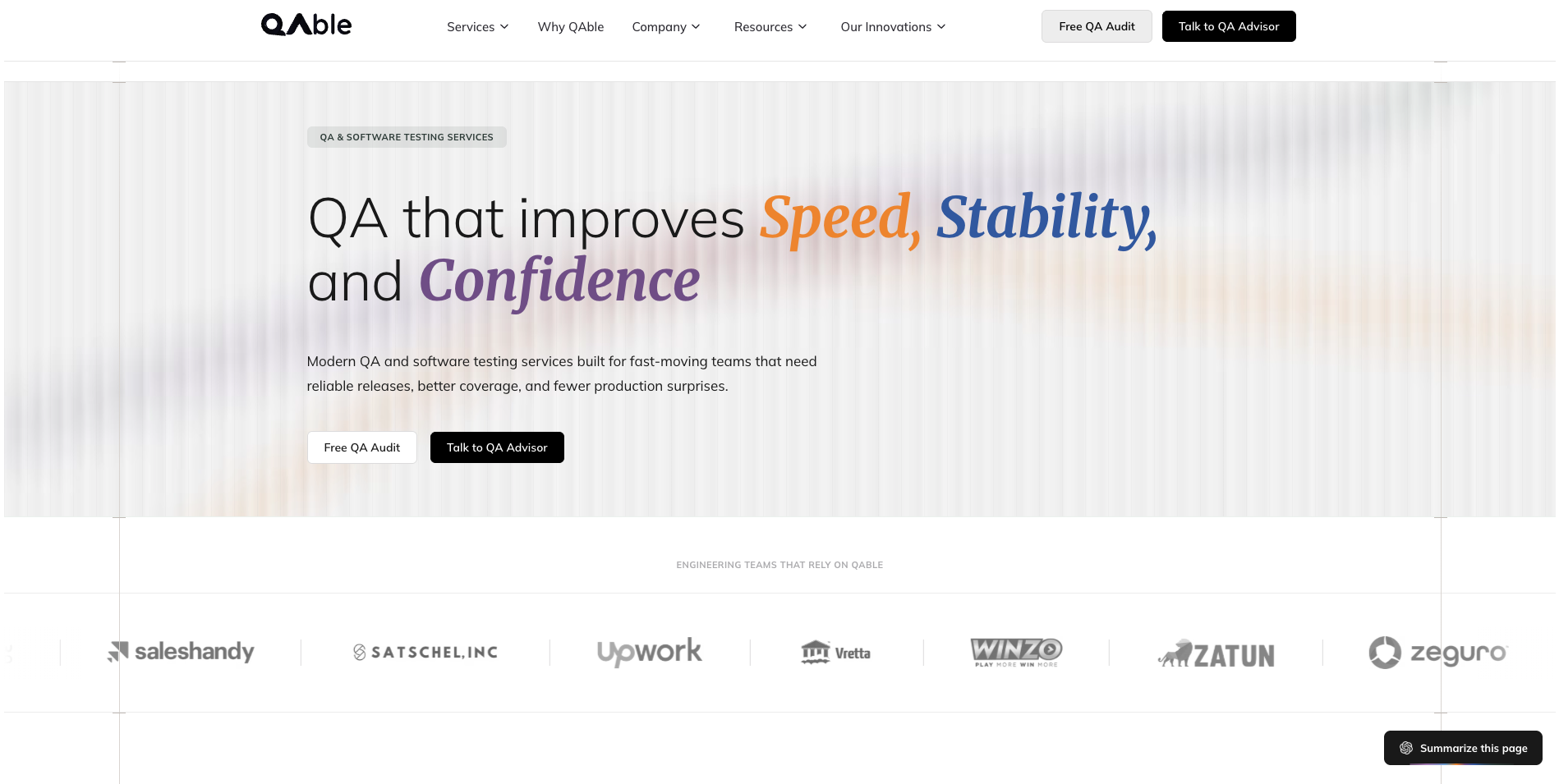
QAble is a quality engineering company founded in 2018 and headquartered in Ahmedabad, India, and describes itself as "a CMMI Level 3 and ISO 42001 certified software testing company in India and USA". It combines audited process and security certifications, its own testing products, and published results for named clients such as Torrid, Exact Sciences, Docyt and Augmont.
Core capabilities:
- Test automation for web, API and mobile, built into your CI/CD pipeline.
- Functional, performance, security and accessibility testing.
- QA audits and QA strategy for teams starting or fixing a test process.
- QA outsourcing and dedicated QA teams, ramped up in 2 weeks.
- Selenium, Playwright, Cypress, Appium, Postman, REST Assured and Karate.
What defines QAble's approach:
- Certified delivery: CMMI Dev Maturity Level 3, ISO/IEC 27001:2022, ISO 9001:2015 and ISO 42001:2023.
- Its own products: Tesbo-X, a Playwright framework with intelligent test selection, and BetterBugs for one-click bug reports.
- Framework structure designed before tests are written, so a UI change does not break the whole suite.
- Testing that runs inside the client's pipeline, with failure evidence a developer can act on.
- Published client results, including zero missed release deadlines for the US retailer Torrid.
2. Cigniti (now part of Coforge)
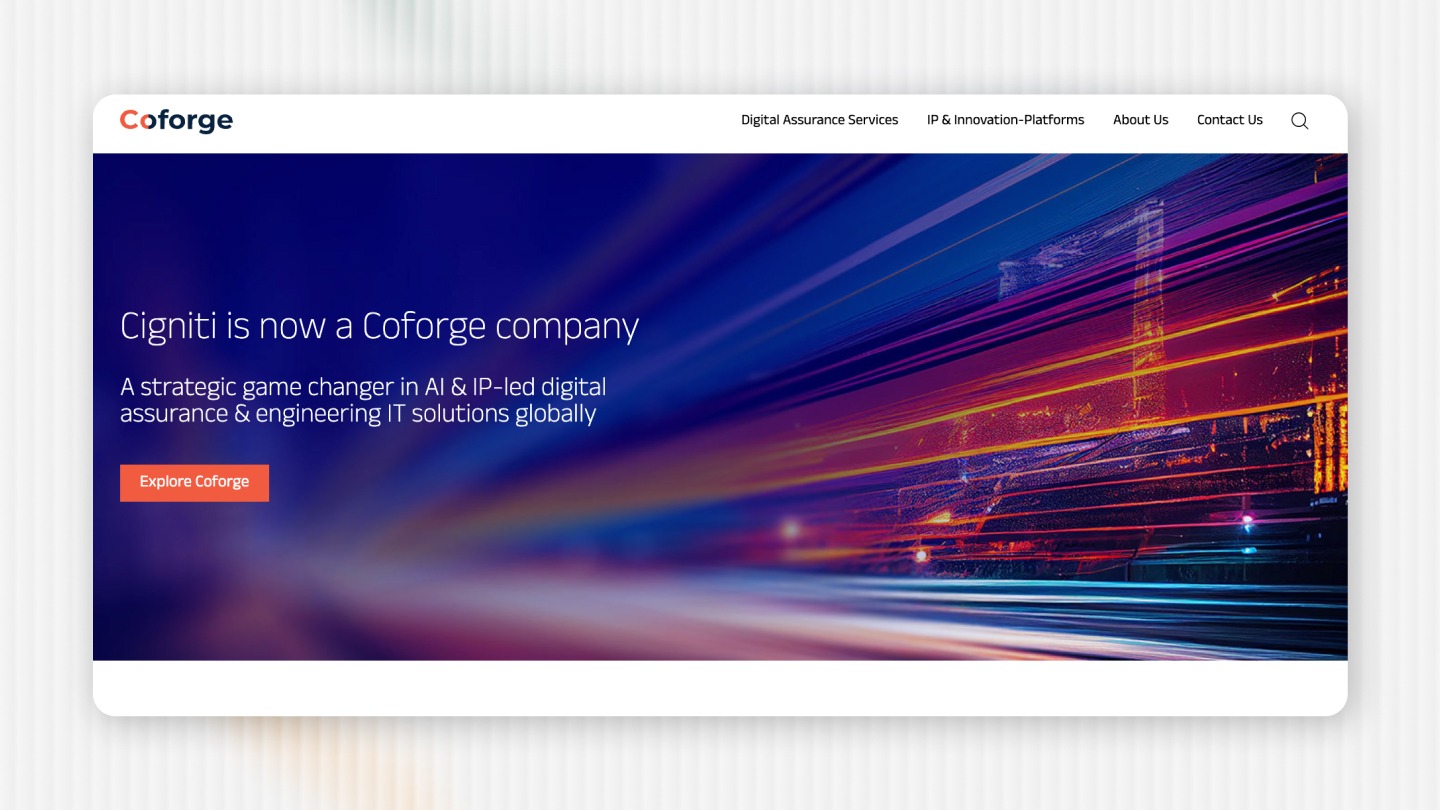
Cigniti Technologies was founded in 1998 and is headquartered in Hyderabad, India, according to its own investor presentation. Coforge closed its acquisition of Cigniti on 30 April 2026, and cigniti.com now redirects to Coforge's quality engineering pages. It suits large enterprises in banking, insurance, healthcare and retail that want testing inside a wider engineering contract.
Core capabilities:
- Advisory and transformation services for quality strategy and governance.
- Quality engineering services with AI-assisted test design and intelligent automation.
- Digital assurance across web, mobile, cloud, data and connected ecosystems.
- Compliance and regulatory assurance with traceable, audit-ready evidence.
- Validation of AI models, agents and autonomous workflows.
What defines Coforge's approach:
- BlueSwan, its AI-led quality engineering suite, working within the client's existing tools.
- AI applied across the lifecycle: requirements analysis, test design, targeted regression and defect analysis.
- Quality embedded across the engineering lifecycle to expose risk earlier.
- Continuous assurance with production monitoring and human intervention points.
- Domain-led quality frameworks for regulated environments.
3. Indium
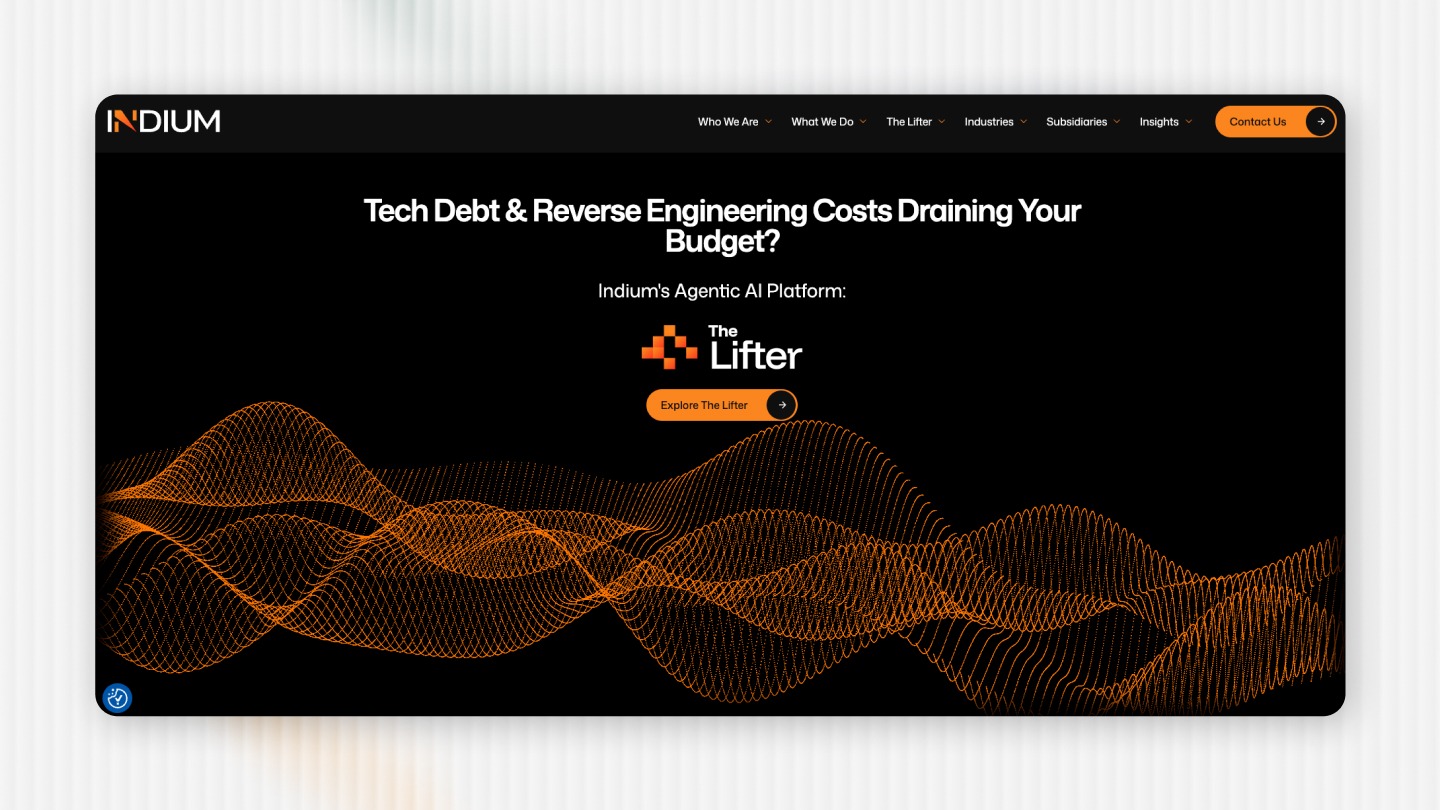
Indium, formerly branded Indium Software, describes itself as an AI services company. It lists a US headquarters in Cupertino, California, and a head office in Chennai, India. Its corporate brochure states "5000+ associates globally" and backing from the private equity firm EQT. It suits enterprises that need data and AI systems tested alongside conventional applications.
Core capabilities:
- Quality engineering with AI-driven testing, CI/CD and DevOps automation.
- AI-led assurance, including LLM application testing.
- Data assurance for data platforms and analytics.
- IoT testing for connected and manufacturing systems.
- Web, mobile, API and cloud testing.
What defines Indium's approach:
- Testing offered alongside AI, data and application engineering from one provider.
- A focus on fixing underlying systems before layering AI on top.
- A 4-week proof of value offered before a larger engagement.
- Industry focus on financial services, healthcare, technology, retail and manufacturing.
- Specialised quality engineering for AI and data systems, not only applications.
4. QualityAI (formerly Qualitest)
QualityAI is the name Qualitest has used since 17 June 2026. Founded in 1997, it says it serves "over 500 blue-chip customers" and is majority-owned by the private equity group Bridgepoint. It describes itself as an independent software testing and quality assurance company, and suits large organisations in financial services, health, energy and the public sector.
Core capabilities:
- AI assurance and engineering.
- Data assurance for accurate, compliant, AI-ready data.
- Functional testing and automation testing for complex enterprise environments.
- AI-powered non-functional testing: performance, resilience, cybersecurity and accessibility.
- Enterprise platform assurance, digital engineering, and advisory and consulting.
What defines QualityAI's approach:
- Quality designed in from the start of the lifecycle, to reduce downstream risk.
- Independent assurance, separate from the team that built the system.
- Engineering discipline combined with AI-enabled delivery methods.
- Assurance across advisory, testing, platforms, data and AI.
- Evidence that gives leaders confidence at go-live.
5. BugRaptors
BugRaptors was established in 2016 and describes itself as "a pure-play QA & testing company, headquartered in India & the US". Its test labs are in Mohali, Punjab, and its US corporate office is in Emeryville, California. It states a team of "200+ ISTQB-certified testers" and suits teams that want a testing-only vendor.
Core capabilities:
- Manual, automation, performance and security testing.
- Web and mobile app testing.
- AI validation: model, hallucination, bias and reasoning testing.
- Automated pull request quality review and code quality analysis.
- Assurance pods for functional risk, security and performance.
What defines BugRaptors's approach:
- Its BRX Assurance System, combining predictive intelligence with human-in-the-loop validation.
- An AI Code Assurance Framework for AI-generated code and AI risk profiling.
- Custom AI agents for test design, test case generation and script review.
- Self-healing automation and a confidence score on every release.
- RaptorVista, its own web automation framework, launched in 2020.
6. DeviQA
DeviQA operates as a full-cycle quality engineering partner, focusing on scalable QA transformation that combines deep automation architecture, rigorous execution, and domain-specific test strategy. Founded in 2010 and backed by 300+ skilled engineers, the company has successfully supported 300+ clients across 40+ industries: including industry leaders like Abbott, Tipalti, BP, Mimecast, and Compass, with specialised expertise in fintech and healthcare.
Core capabilities:
- End-to-end quality engineering and test automation.
- Functional, performance, security, mobile, and API validation.
- Agile QA integration and dedicated team embedding.
- CI/CD pipeline integration and parallel execution scaling.
- Playwright, Selenium, Appium, API, and system-level testing.
What defines DeviQA's approach:
- Product-led QA customised to complex tech stacks and enterprise velocity.
- Robust test coverage across 40+ distinct industry verticals.
- Proactive bug tracking and deep automation architecture depth.
- Seamless integration into client development orgs as embedded team members.
- Measurable reduction in production defects and cycle times.
7. AppSierra
AppSierra, now presenting itself as Appsierra Group, is based in Noida, India, with a US contracting entity registered in Lewes, Delaware. It also runs its own SaaS products. It suits companies that eventually want to own an India QA team rather than rent one.
Core capabilities:
- Quality assurance and test automation with Playwright, Cypress and Selenium.
- Performance, API and regression testing.
- Penetration testing.
- AI and LLM evaluation, guardrails and RAG testing.
- Build-operate-transfer India capability centres.
What defines AppSierra's approach:
- AI agents generate tests and triage failures; a named senior engineer signs off every output.
- Evaluation gates for faithfulness, bias, safety and coverage on every output.
- A paid pilot tied to the client's own metric before any longer commitment.
- A capability centre run under its governance, then transferred to the client with no lock-in.
- ISO 27001 security and the client's IP protected from day one.
8. HikeQA
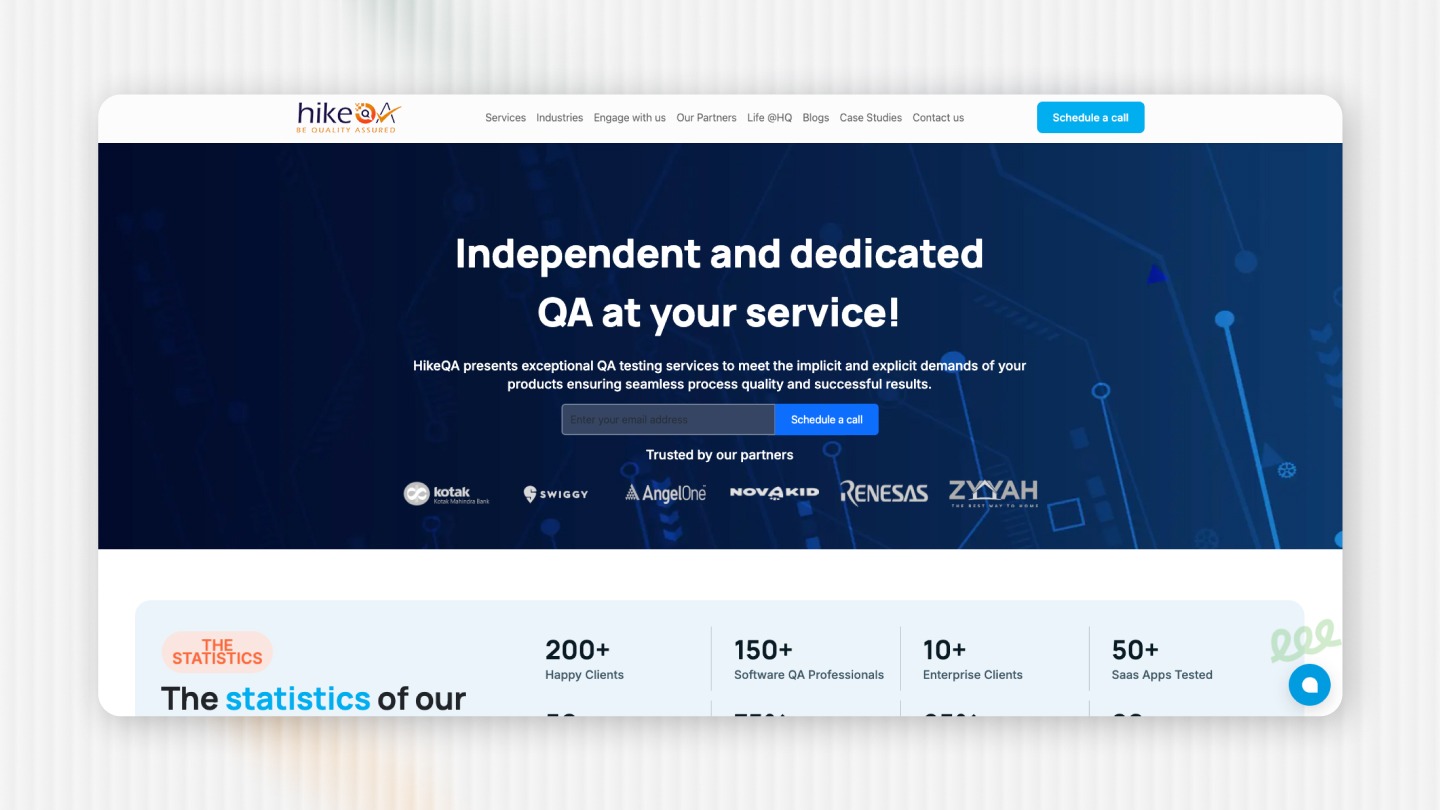
HikeQA lists an Indian business in Noida and a US company, Hike Business Services LLC, in Oro Valley, Arizona. Its homepage states "150+ Software QA Professionals" and a focus on SaaS and mobile applications. It suits SaaS and mobile product teams that want to judge a provider on real work first.
Core capabilities:
- Web, mobile and SaaS app testing.
- Test automation and manual testing.
- Performance and security testing.
- Enterprise and database testing.
- QA staffing and QA audits.
What defines HikeQA's approach:
- A trial assessment of 2 weeks before a long-term contract.
- ISTQB-certified QA professionals.
- Team size adjusted on demand as the product changes.
- QA processes built from scratch where none exist, including documentation and regression schedules.
- Support available 24 hours a day, 7 days a week.
9. ThinkSys
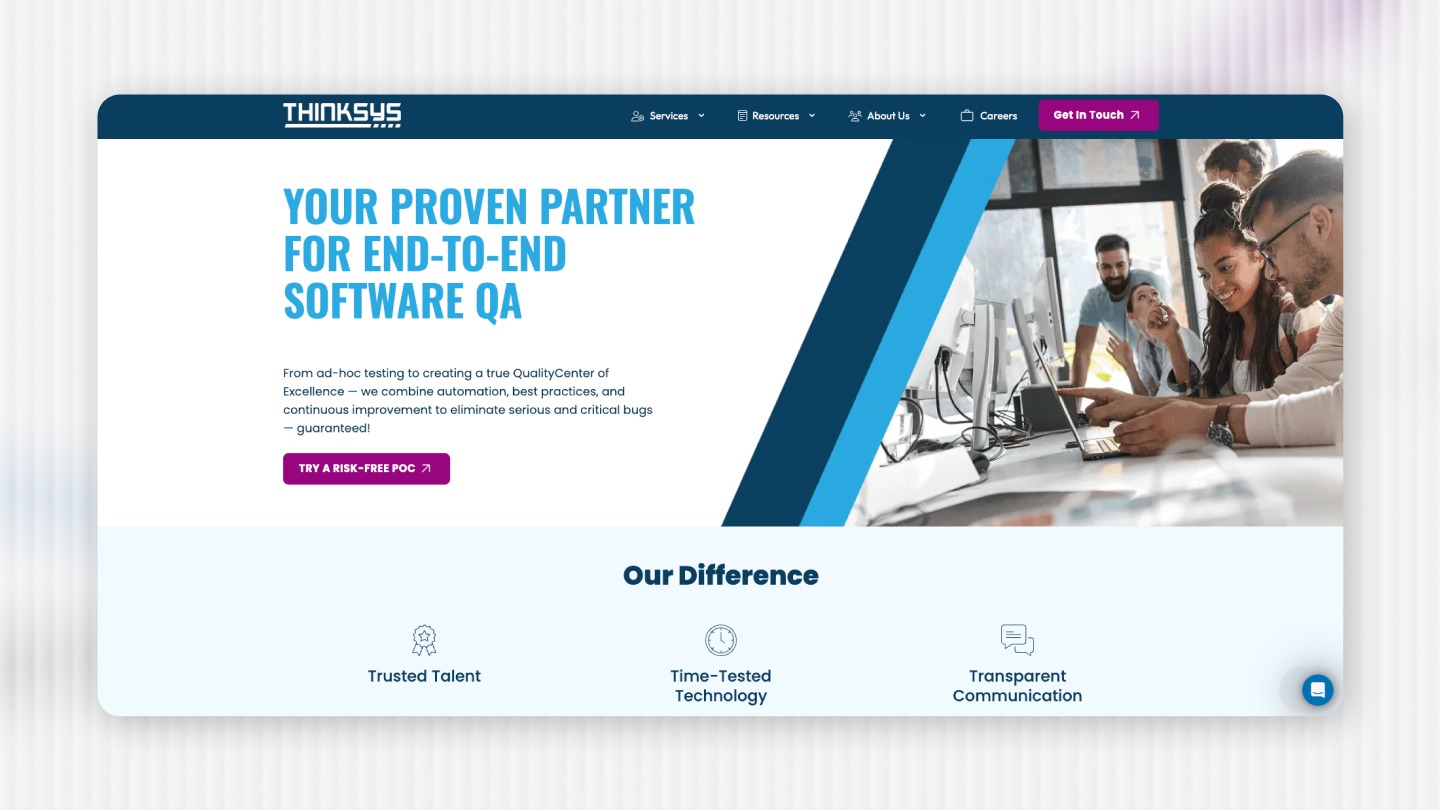
ThinkSys was founded in 2012 by Rajiv Jain. Its registered address is in Sunnyvale, California, and its engineering team is in Noida, India. It states CMMI Maturity Level 3 and testing under HIPAA, PCI-DSS and SOC 2 constraints, and suits companies in healthcare, fintech or SaaS.
Core capabilities:
- Automation, mobile, functional and API testing.
- Performance and security testing.
- QA for LLM-based applications.
- SaaS testing: multi-tenant, subscription and billing validation.
- Industry testing for e-commerce, insurance and media.
What defines ThinkSys's approach:
- Senior QA engineers combined with AI-powered testing.
- Low-maintenance automation frameworks that grow sprint over sprint.
- A choice of managed testing, an embedded dedicated team or targeted expertise.
- A published zero critical bug guarantee.
- A team that "operates during US Eastern mornings".
10. TestVox
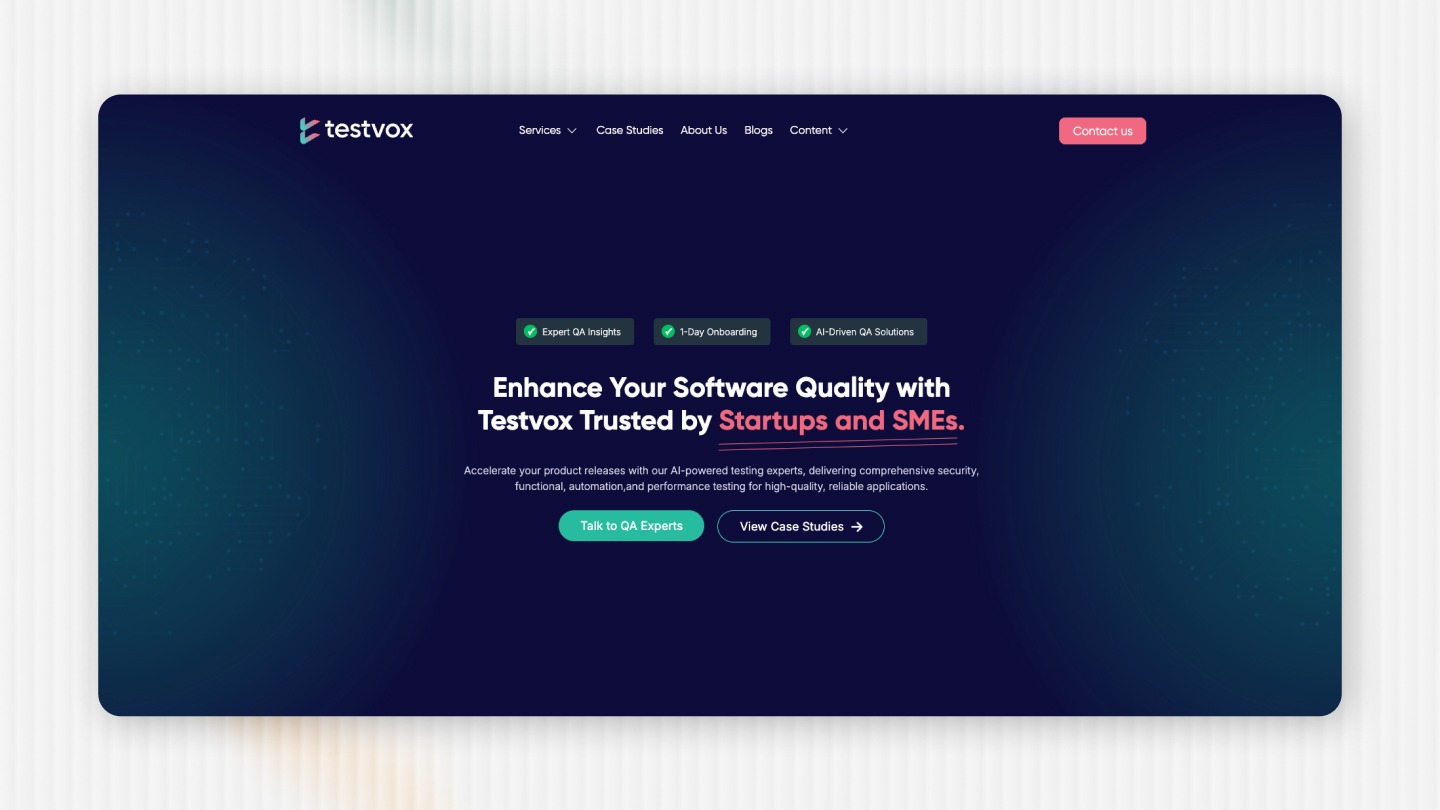
TestVox lists two entities: Testvox LLP in Kottakkal, Kerala, and Testvox FZCO in Dubai. It says it has clients in India, the USA, the UK and the Middle East, and its Clutch profile gives 2017 as its founding year. Its homepage positions it as "Trusted by Startups and SMEs".
Core capabilities:
- Functional and automation testing.
- Performance and security testing.
- Crowd testing and IoT device testing.
- Playwright testing.
- A quick QA offer for startups.
What defines TestVox's approach:
- AI-powered testing combined with real-device validation.
- A managed testing service with full QA ownership.
- A focus on startups and SMEs.
- Clients across India, the USA, the UK and the Middle East.
- Testing sized for early-stage and cost-conscious teams.
11. TestGrid
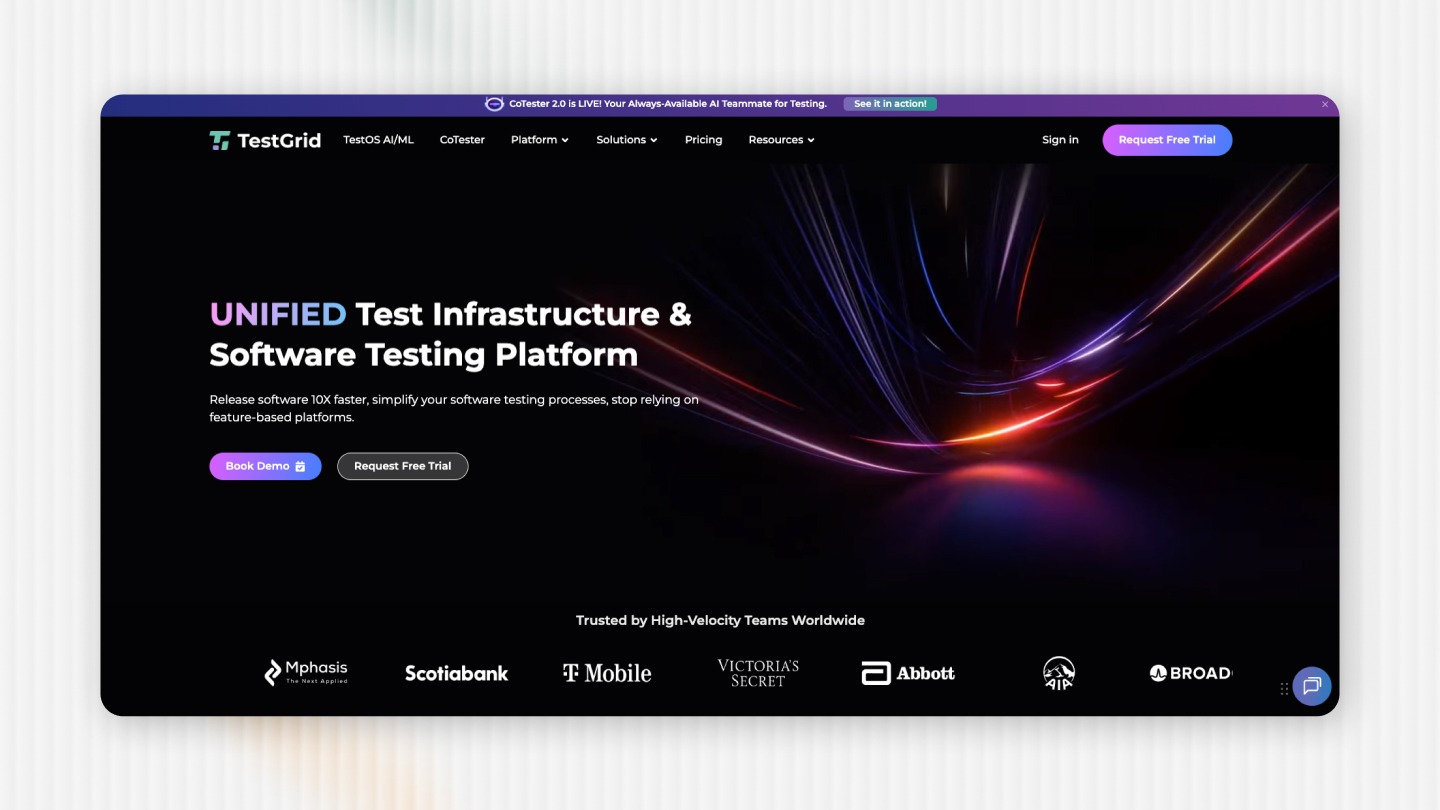
TestGrid is a testing platform rather than a testing services company. Founded in 2015 and based in Alpharetta, Georgia, it sells an AI-assisted testing platform with real devices, browsers and on-premise labs, and lists data centres in Atlanta, Phoenix and Mumbai. It suits teams that already have testers and need devices and infrastructure.
Core capabilities:
- Device and browser cloud, including on-premise labs.
- Codeless automation with record-and-play and low-code authoring.
- Scripted automation in a web-based IDE.
- Performance testing with built-in JMeter support.
- CoTester, its AI testing agent.
What defines TestGrid's approach:
- Unified test infrastructure, in the cloud or on premises.
- Low-code authoring so non-specialists can automate.
- Air-gapped labs for regulated work.
- Case studies across IoT, 5G and smart-home testing.
- Your own team, or a services partner, still does the testing.
12. QASource
QASource was founded in Pleasanton, California, in 2002 and keeps its headquarters there. Its largest engineering centres are in Chandigarh and Bhubaneswar, India. It states ISO 27001:2022 and ISO 9001:2015 certification, and suits engineering leaders who want a long-term dedicated team.
Core capabilities:
- Dedicated QA teams.
- Test automation.
- Mobile app testing.
- Salesforce testing.
- AI assurance and human validation of AI agents.
What defines QASource's approach:
- A dedicated team the client shapes and keeps for years, not a rotating bench.
- QASIP, its own platform, included with the team.
- Long engineer tenure: it says more than a hundred engineers have been with it for over a decade.
- Defined-finish work priced as one outcome.
- Quality engineering for AI-assisted development.
For more on how Indian providers built their reputation with global clients, see why global companies trust Indian software testing companies. If automation is your main need, our list of automation testing companies in India and USA goes deeper on frameworks and CI.
Five ways to engage a testing company
The model matters as much as the company. A dedicated team suits a product that changes every sprint. Managed testing suits a stable product with a defined release calendar. A pilot suits any buyer who has been burned before.
Cost
We do not publish rate ranges here. Rates vary with seniority, engagement model and contract length, and any range without your scope would be invented. Compare quotes on the same scope instead: the same test cases, the same environments and the same reporting.
How to choose the right software testing company
Most providers offer similar services on the surface. The difference is how testing is executed, integrated and scaled inside your engineering system, so judge execution, not the service list. The seven checks below are the ones we would use ourselves.
1. Automation maturity
Ask to see one real pipeline run from an existing client, with names removed.
- How long the suite takes, and how much of it runs in parallel
- How many tests failed for reasons other than a real defect
- How much effort goes into maintaining tests each sprint
Poor automation leads to unstable pipelines and delayed releases, which is the opposite of what you are paying for.
2. CI/CD integration
Testing should run inside your pipeline and report there. Ask how a failed test reaches a developer: a link to the failing step with logs is useful, a weekly spreadsheet is not. Without that integration testing becomes reactive.
3. Coverage strategy
Ask how they decide what to test first. A good answer starts from your critical user journeys and highest-risk changes, balances UI, API and system-level tests, and cuts tests that never find anything. A poor answer is a test case count.
4. Scalability of execution
Ask what happens to run time when your regression suite doubles. Parallel execution and good infrastructure keep release timelines predictable as the product grows. Without them, testing becomes the bottleneck.
5. Debugging and failure evidence
Testing is only useful if failures can be acted on. Ask for a sample defect report: it should carry steps, environment, logs, screenshots or traces, and severity. Vague reports slow every fix.
6. Communication and ownership
Ask who owns quality outcomes and how often you will hear from them. Proactive reporting, clear accountability and direct contact with your developers matter more than any tool. See our QA Testing Best Practices for what good reporting looks like.
7. Fit with your engineering system
Check the provider has tested your stack before: your frameworks, your cloud, your architecture. Misalignment leads to slow onboarding and incomplete validation, whatever the price.
Check certificates, not logos
Certification does not prove good testing, but it does prove a provider handles quality and security in an audited way. On the edition point, TÜV NORD's customer notice on the ISO/IEC 27001 revision sets out the transition rules that made 2013-edition certificates invalid. That matters when the provider will see your source code, test data or production credentials.
What the industry data says
Capgemini's World Quality Report and Forbes insights from a Forbes Technology Council member are the sources most lists quote. Both point the same way: quality engineering is a core part of delivery, and regression testing at enterprise scale is expensive. Neither tells you what your own testing should cost, which is why the scope comparison above matters more.
Poor quality also carries a business cost that rarely shows up in a testing budget. Our piece on Software Quality Business Risk covers how to make that case internally.
The full engagement is in our Torrid case study.
A shortlist sequence that works
- Write down your stack, release cadence and the three user journeys that must never break
- Decide the engagement model: dedicated team, managed testing or a pilot first
- Shortlist three providers whose services and experience fit your product
- Ask each for its certificates, a sample test report and a real pipeline run
- Run a paid pilot or trial on one real feature, not a demo application
- Compare results on defects found, evidence quality and time to feedback
- Sign for the model that worked, with reporting, ownership and exit terms in writing
Final thoughts
The companies on this list offer similar services. They differ in who owns the work and how testing fits into your pipeline. Those are the differences that decide whether a partnership speeds up your releases or slows them down.
Treat QA outsourcing as an engineering decision rather than a cost decision. Effective outsourcing builds a testing system that runs inside development and scales with the product.
If you want to see how that works on your own product, QAble's QA outsourcing service starts with a review of your current pipeline and the journeys that matter most.