


In 2026, software quality is no longer decided at a single point in the development lifecycle. Modern systems are continuous, distributed, and always evolving. This has made traditional “test at the end” models ineffective. As a result, two approaches have gained widespread adoption: Shift Left and Shift Right testing.
While both aim to improve quality, they solve very different problems. Many teams adopt one blindly, misuse both, or treat them as competing strategies. In reality, Shift Left and Shift Right are complementary, and knowing when to use each is what separates mature quality engineering teams from reactive ones.
This blog breaks down what each approach truly means in 2026, how they differ, and how to apply them intentionally based on system maturity, risk, and business context.
Key Takeaways:
- Shift Left focuses on preventing defects early in the lifecycle, while Shift Right focuses on learning from real user behavior and production signals after release.
- Shift Left reduces risk, cost, and rework by catching functional, integration, and non-functional issues before they reach shared or production environments.
- Shift Right uncovers performance bottlenecks, edge cases, and usage patterns that are difficult or impossible to simulate in test environments.
- In 2026, mature QA teams treat quality as a continuous feedback loop that intentionally combines Shift Left prevention with Shift Right learning.
- Tools only add value when they are used at the right time, with clear intent, rather than being added across the pipeline without focus.
- Shift Left works best for known risks, stable workflows, and fast feedback cycles supported by automation and CI/CD practices.
- Shift Right becomes critical for complex, large-scale, and user-driven systems where real-world variability is unavoidable.
Related Read: Shift Left and Shift Right in software development and DevOps
What Does Shift Left Really Mean in 2026?
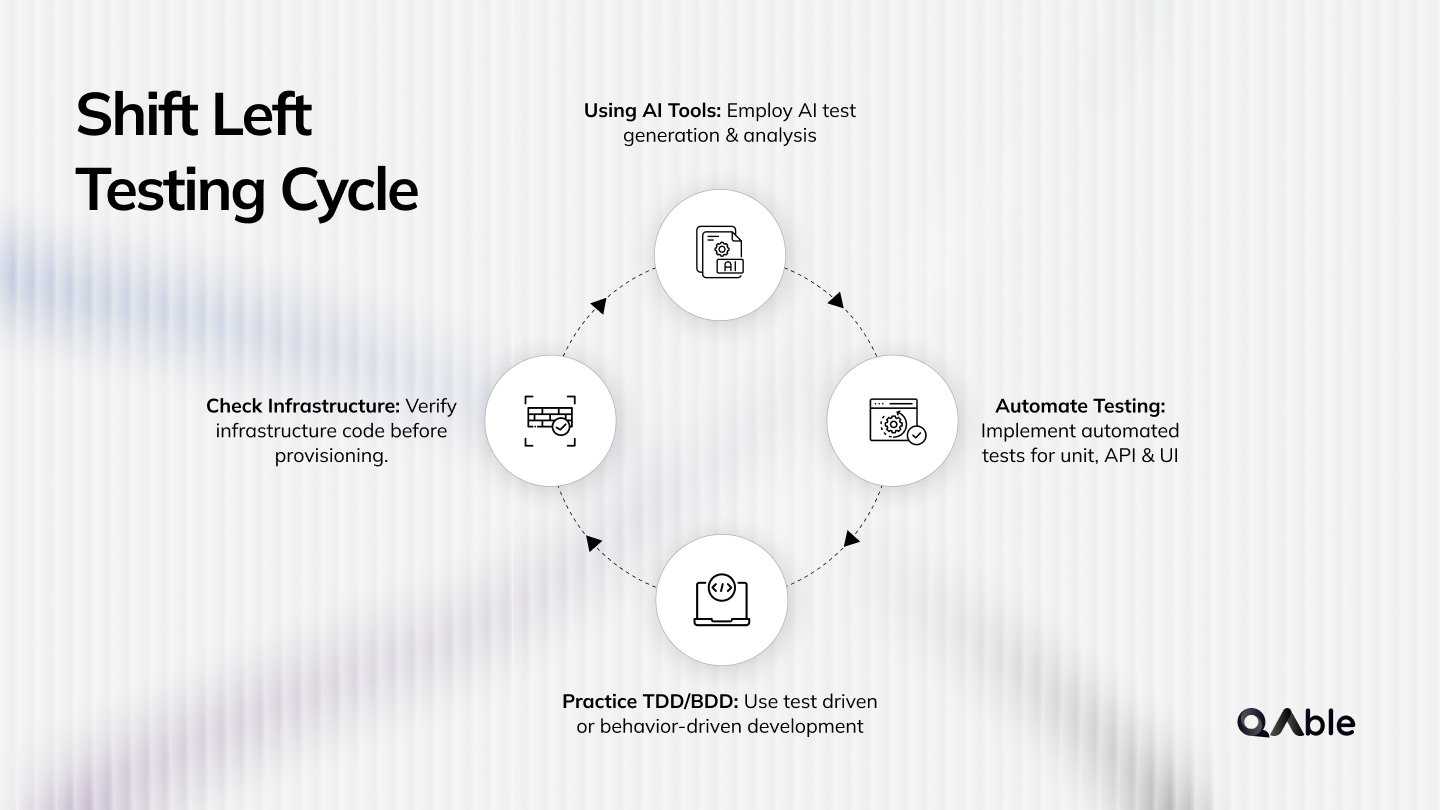
Shift Left testing focuses on moving quality activities earlier in the software development lifecycle. The idea is simple: the earlier you detect issues, the cheaper and easier they are to fix.
In 2026, Shift Left goes beyond early testing. It includes:
- Testing during requirement definition
- Quality checks embedded into design decisions
- Automated tests running with every code change
- Static analysis, security scans, and contract testing before integration
Shift Left today is deeply tied to CI/CD pipelines, developer workflows, and automation-first strategies.
Where Shift Left Adds the Most Value?
- Catching defects before they reach shared environments
- Reducing rework and late-stage surprises
- Enabling faster, safer releases
- Improving collaboration between QA, developers, and product teams
Shift Left works best when systems are well-defined, changes are frequent, and teams aim to prevent defects rather than react to them.
When Should You Use Shift Left in 2026?
Shift Left is most effective when:
- Your product has frequent releases
- Automation coverage is strong
- Requirements and architecture are relatively stable
- Defects are costly to fix late
- Teams want predictable release quality
Typical use cases include:
- SaaS platforms with rapid iteration
- APIs with strong contract definitions
- Enterprise systems with strict compliance needs
Shift Left helps you move fast without breaking things.
Related Read: Shift Left testing guide
What Does Shift Right Mean in 2026?
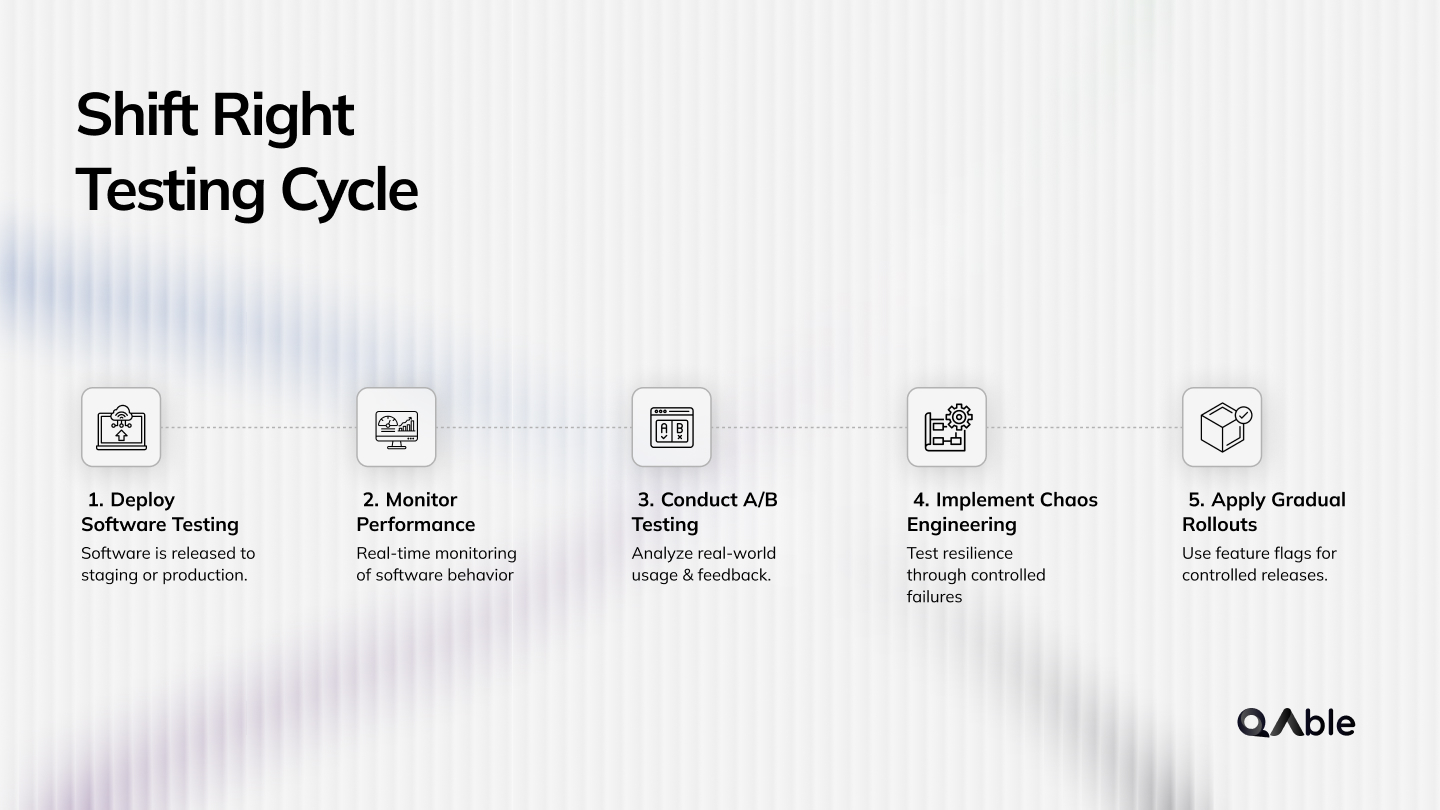
Shift Right testing focuses on learning from real usage after release. Instead of assuming pre-release testing can cover everything, Shift Right accepts that some quality insights only emerge in production.
In 2026, Shift Right includes:
- Observability and telemetry-driven quality signals
- Real-user monitoring and behavior analysis
- Feature flags, canary releases, and controlled rollouts
- Chaos engineering and resilience testing
- Feedback loops from support tickets and usage patterns
Shift Right is not “testing in production instead of before.” It is about validating assumptions under real conditions.
Where Shift Right Adds the Most Value?
- Understanding real user behavior and edge cases
- Validating performance and reliability at scale
- Detecting issues impossible to simulate in test environments
- Improving long-term system resilience
Shift Right works best for complex, distributed, user-driven systems where unpredictability is unavoidable.
When Should You Use Shift Right in 2026?
Shift Right becomes essential when:
- Systems operate at high scale or high variability
- User behavior is unpredictable
- Performance and reliability are critical
- Failures must be detected and mitigated quickly
- Business impact depends on real-time insights
Typical use cases include:
- Consumer-facing platforms
- Gaming, fintech, and e-commerce systems
- AI-driven or data-heavy applications
Shift Right helps you learn, adapt, and improve continuously.
What to choose between both in 2026?
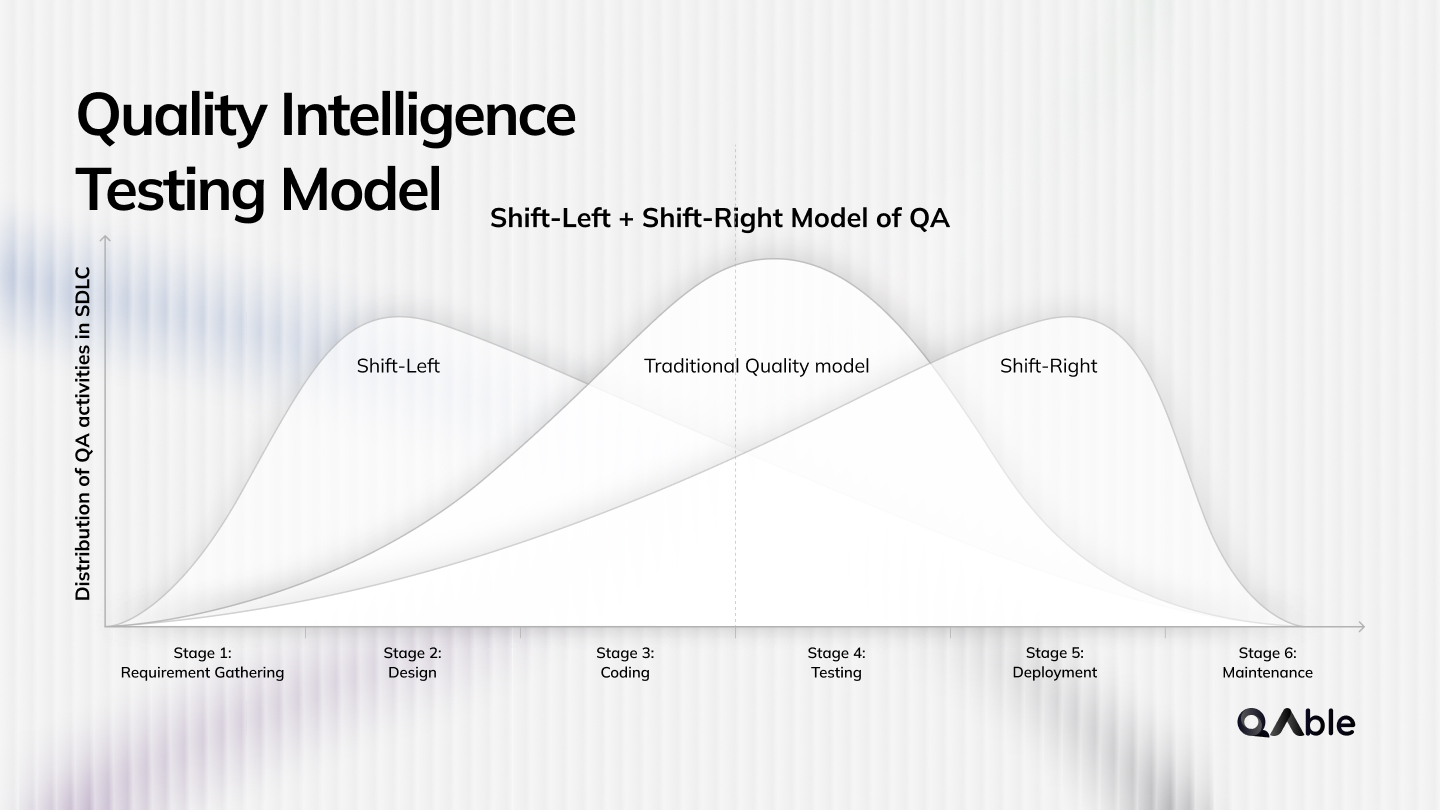
The Shift Left vs Shift Right debate is outdated. High-performing teams in 2026 don’t choose one, they design for both.
A mature quality strategy looks like this:
- Shift Left to prevent known risks
- Shift Right to discover unknown risks
- Use production insights to improve pre-release testing
- Treat quality as a continuous feedback loop
Shift Left reduces surprises.
Shift Right handles reality.
Together, they create resilient systems.
Common Mistakes Teams Make
- Treating Shift Right as an excuse to test less before release
- Overloading Shift Left with unrealistic coverage expectations
- Ignoring production feedback in test planning
- Failing to connect monitoring data back to QA strategy
Both approaches fail when used in isolation.
Related Read: Risk Based Testing in Agile: What You Need to Know
Types of Shift Left Testing in 2026
Shift Left testing is not a single activity. In mature teams, it happens in layers, each addressing quality at a different stage of development.
1. Requirements and Design Shift Left
Quality begins before code exists. Testers collaborate with product and design teams to review requirements, user stories, and acceptance criteria to identify ambiguity, gaps, and risks early.
Focus areas:
- Requirement clarity and testability
- Acceptance criteria validation
- Early risk identification
2. Developer-Level Testing
Testing moves closer to developers by embedding quality checks directly into development workflows.
Focus areas:
- Unit testing
- Code reviews and static analysis
- Local test execution before commits
3. API and Contract Testing
Instead of waiting for full system integration, teams validate service contracts early to prevent downstream failures.
Focus areas:
- API contract validation
- Schema and data consistency
- Service dependency isolation
4. Automation-Driven Shift Left
Automation becomes the backbone of early testing by running continuously with every code change.
Focus areas:
- CI-triggered automated tests
- Regression prevention
- Fast feedback loops
5. Security and Performance Shift Left
Non-functional risks are identified early rather than late-stage surprises.
Focus areas:
- Static security scans (SAST)
- Early performance benchmarks
- Compliance checks
Types of Shift Right Testing in 2026
Shift Right testing focuses on learning from real usage once software is live. It extends quality ownership beyond release.
1. Monitoring and Observability-Based Testing
Production systems are continuously observed to detect anomalies and quality degradation.
Focus areas:
- Logs, metrics, and traces
- Error rates and response times
- System health indicators
2. Real User Monitoring (RUM)
Instead of synthetic tests, teams observe how real users interact with the system.
Focus areas:
- User journeys and drop-offs
- Performance across geographies and devices
- UX friction points
3. Feature Flags and Controlled Releases
Testing continues safely in production using progressive rollout strategies.
Focus areas:
- Canary releases
- A/B testing
- Gradual feature exposure
4. Chaos and Resilience Testing
Teams intentionally introduce failures to validate system robustness.
Focus areas:
- Fault tolerance
- Recovery behavior
- System resilience under stress
5. Feedback-Driven Testing
Production feedback becomes an input to future test planning.
Focus areas:
- Customer feedback and support tickets
- Usage analytics
- Production defect patterns
Shift Left Testing Tools (Pre-Release Quality)
Tool | Primary Purpose | Typical Use Cases | Pricing Model | Skill Level Required |
|---|---|---|---|---|
Jenkins | CI/CD orchestration | Triggering automated tests on every commit, build validation | Open-source (free), paid plugins optional | Intermediate (CI/CD knowledge) |
SonarQube | Static code analysis | Code quality checks, security scanning, technical debt tracking | Free community edition, paid enterprise plans | Intermediate (code understanding) |
GitHub Actions / GitLab CI | Integrated CI/CD pipelines | Automated builds, test execution, pipeline automation | Included in platform plans, usage-based | Beginner to Intermediate |
Playwright / Selenium | Test automation frameworks | Functional regression, cross-browser testing in pipelines | Open-source (free) | Intermediate to Advanced |
Parasoft SOAtest | API & integration testing | Early API testing, contract validation, non-functional checks | Commercial licensing | Intermediate to Advanced |
Shift Right Testing Tools (Post-Release Learning)
Tool | Primary Purpose | Typical Use Cases | Pricing Model | Skill Level Required |
|---|---|---|---|---|
Datadog | Observability & monitoring | Real-time metrics, logs, alerts from production | Subscription (usage-based) | Intermediate |
Grafana + Prometheus | Metrics & visualization | Performance monitoring, trend analysis, dashboards | Open-source core, enterprise tier available | Intermediate to Advanced |
LaunchDarkly | Feature flag management | Canary releases, controlled rollouts, feature toggles | Subscription (tiered by usage) | Intermediate |
Optimizely | Experimentation & A/B testing | User behavior validation, UX experiments | Subscription (enterprise pricing) | Intermediate to Advanced |
New Relic / Dynatrace | Application Performance Monitoring (APM) | Error tracing, latency analysis, user impact monitoring | Subscription (data-volume based) | Intermediate to Advanced |
Related Read: Scalable QA process for fast delivery
Final Thoughts
In 2026, quality is not about choosing sides. It’s about timing, intent, and balance. Shift Left helps teams build confidence before release, while Shift Right helps them stay grounded in real-world behavior after release.
At QAble, we see the strongest outcomes when teams stop asking which approach is better and start asking what problem are we solving right now. When prevention and learning work together, quality becomes proactive, adaptive, and sustainable.
The future of testing isn’t left or right.
It’s continuous.