View all services
Talk to QA Advisor
/QAble Weekly/Vol. 001 · 26 Jun 2026

● This week’s signal » AI’s bottleneck has shifted from writing code to verifying it.

Signal Over Noise

‹ PrevNext ›
Friday, 26 June 2026  ·  Vol. 001

Story of the Week

The “verification layer” became an investable market overnight, and QA is its core

In 48 hours, three independent signals snapped into one picture. Checksum shipped its API Agent (June 25), extending its autonomous “Continuous Quality Agent” into backend APIs, generating stateful PyTest journeys, healing them, and committing them as pull requests to your own repo. New Relic launched a startups program (June 26) justified squarely by the fact that 78% of leaders report more incidents once AI code ships. And the June 24 venture tape funded the rails: Runlayer ($30M, agent governance) and Coval ($28M, AI agent testing & evaluation). Verification, evaluation, and governance of AI output stopped being features and became standalone, venture-backed categories. For Heads of QA, this is the strongest strategic moment in a decade: the function is being repositioned from cost-center checkpoint to the system that lets a company scale AI safely.


Why it matters: The 2026 org question shifts from “how many AI assistants” to “who owns the verification layer.” AI governance is consolidating into QA / platform budgets, not security’s. Vendors are racing to own a line item the industry only just named.
Checksum logo
Checksum’s API Agent commits journey tests as pull requests to a team’s own repo. · Checksum, via Manila Times
QAbleWeeklySection 01  ·  This Week’s Launches

Product Launches

A dense QA-vendor launch cluster, all pointing the same direction

What: Tricentis, SmartBear, Testaify and TestMu all shipped agentic, self-healing testing in a single week.

One week, one message: agentic, self-healing, “control layer.” Tricentis launched agentic AI testing for SAP; SmartBear added AI test generation to ReadyAPI; Testaify 2.0 pushed autonomous testing beyond execution; and TestMu AI (ex-LambdaTest) shipped Test.md, an agent-native framework. When challengers and incumbents homogenize positioning this fast, the category is being defined in real time.

A developer reviewing AI-generated code, illustrating the shift toward agentic testing
Quality engineering is becoming a control layer for AI-assisted development. · Image: InfoQ
Why it matters: A land-grab window is open before the category term hardens. Incumbents bolt AI onto API/SAP testing; challengers lead on no-lock-in.

Launch Log

  • Checksum

    API Agent: autonomous, journey-based API tests committed as pull requests (Jun 25).

  • New Relic

    New Relic for Startups: free tier + AI monitoring and an SRE Agent (Jun 26).

  • Tricentis

    Agentic AI testing for SAP transformation programs.

  • SmartBear

    AI test generation built into ReadyAPI.

  • Testaify

    Testaify 2.0: autonomous testing that moves beyond execution into app intelligence.

  • TestMu AI

    Test.md: an agent-native, markdown-first test framework in the Kane CLI.

  • mabl

    AI-native “agentic tester” that authors end-to-end journeys from natural language.

  • UST × K2View

    Partnership on AI-driven synthetic test data for automation.

QAbleWeeklySection 02  ·  Frameworks & Failures

Frameworks

Playwright decisively overtakes Selenium as the default automation stack

The substrate under QA is being rewritten at the same time as the AI layer on top. Playwright now runs at roughly 30M weekly downloads to Cypress’s ~6.5M, has passed 78,000 GitHub stars, and holds about 45% adoption among QA professionals, while Selenium has slipped toward ~22%. BrowserStack, Sauce Labs and LambdaTest all run Playwright grids as first-class citizens, and mabl leaned further into an AI-native “agentic tester” that authors end-to-end journeys from natural language.

Why it matters: Standardize new suites on Playwright; treat Selenium as legacy maintenance. Cloud grids and AI test-generation now assume a Playwright-first world.

Failures & Data

The “AI ships, incidents follow” pattern is now quantified, not anecdotal

DORA data shows incidents per pull request up 242.7% in the AI era. Amazon traced a cluster of severe retail outages to “Gen-AI assisted changes.” The headline incident was caused by an engineer acting on advice an AI agent inferred from an outdated internal wiki. A grounding failure, not a model failure: verification and retrieval hygiene are now QA concerns.

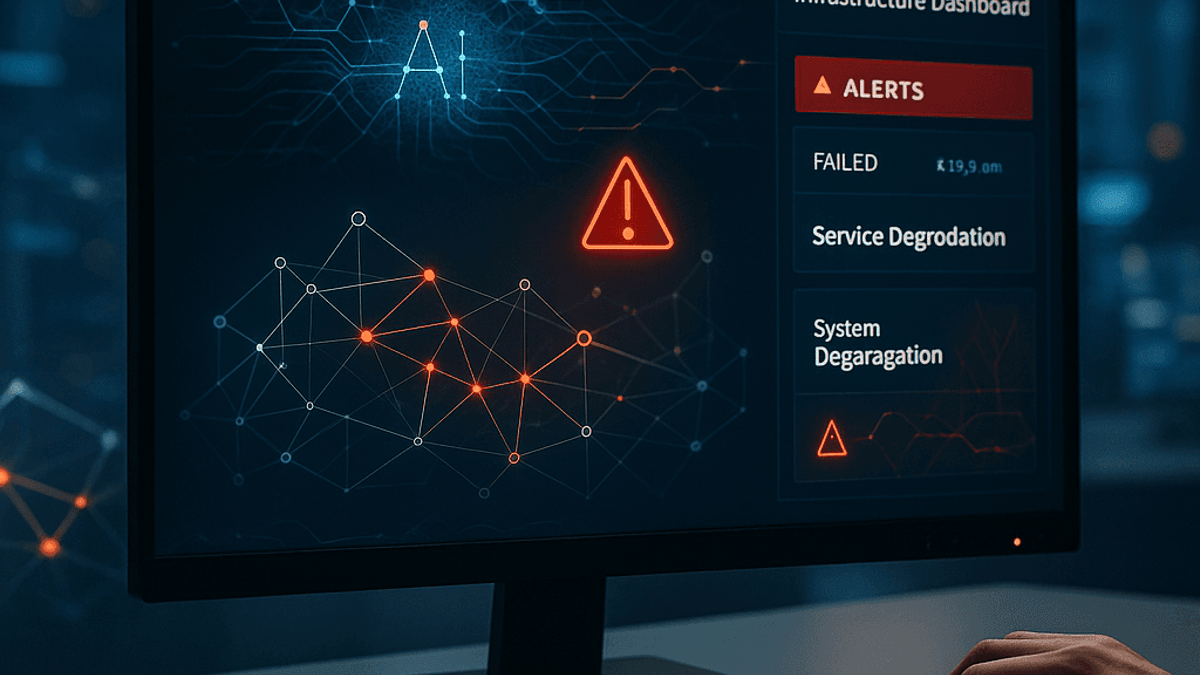
Outage alert dashboard illustration accompanying the Amazon AI-deployment report
An outage-alert dashboard accompanying the Amazon AI-deployment report. · Illustration: TechBuzz

Failures & Incidents

  • Claude API + Code outage (Jun 23)

    Elevated error rates across models stalled AI-assisted workflows industry-wide; AI vendors are now critical-path infrastructure.

    Windows News

  • Amazon retail outages tied to “Gen-AI assisted changes”

    Internal docs flagged a trend of incidents; the headline fault came from an engineer acting on advice an AI agent inferred from an outdated internal wiki.

    TechBuzz

  • Incidents per pull request up 242.7%

    DORA’s AI-era data: throughput rose while per-change risk more than tripled. Deployment-frequency vanity metrics now mislead.

    DORA 2025 · InfoQ

Hiring & Trends

AI’s hidden tax: senior engineers now spend 20–35% more time on review

Roughly 90% of developers now use AI assistance (~2 hrs/day median), but the gains carry a hidden cost. Senior engineers report spending 20–35% more time on code review when juniors lean on AI, a SmartBear survey of 273 leaders found 70% say quality has already degraded, and PRs with AI-assisted code carry 1.7× more issues. New titles (AI Governance Engineer, Verification Engineer) are emerging to absorb the load.

QAbleWeeklySection 03  ·  Editor’s Note

By the Numbers · The AI quality gap, quantified

+242.7%
Rise in production incidents per pull request in the AI era
Source: DORA 2025 (via InfoQ)
78%
of leaders see more incidents once AI-assisted code actually ships
Source: New Relic
70%
of software leaders say application quality has already degraded
Source: SmartBear survey, May 2026 (n=273)
82%
lower test-failure rate vs. hand-maintained suites
Source: Checksum

Editor’s Note

Viral Patel, Co-Founder of QAble
Viral PatelCo-Founder, QAble
The companies that win the AI era won't be the ones generating the most code. They'll be the ones with the highest confidence in every release.

Can we trust what we’re about to ship?

For two years the AI conversation in engineering was measured in velocity: lines generated, PRs merged, cycle time shrunk. This week the bill arrived.

DORA’s latest data shows incidents per pull request up 242.7%. New Relic reports 78% of leaders see more incidents after AI-assisted code ships, even when they rated that code highly in review. Amazon traced severe outages to “Gen-AI assisted changes,” including a fault shipped because an AI agent confidently inferred guidance from an outdated internal wiki.

None of this means AI is failing. It means we mismeasured the win. AI moved the bottleneck. It didn’t remove it; it relocated it, from writing code to trusting code.

You can watch the market reprice in real time. In a single week, Checksum extended autonomous testing into APIs, New Relic built a program around post-deploy AI incidents, and investors wrote eight-figure checks into agent governance and AI evaluation. Verification stopped being a feature and became a category.

The uncomfortable part for engineering leaders: AI is an amplifier, not an equalizer. It makes disciplined teams faster and undisciplined teams more dangerous, at the same speed. Your verification maturity is now the ceiling on your AI return.

Quality Engineering used to be the last checkpoint before release. It is becoming the operating system that lets a company scale AI without scaling its blast radius. The teams that win the next 18 months will answer one question without flinching:

QAbleWeeklySection 04  ·  Briefing

Funding & M&A

  • Runlayer $30M · Series A
  • Coval $28M · Series A
  • Hang Ten Systems $32M · Seed

Research

  • Rethinking Agent-Generated Tests

    Agent-written tests can give false confidence; coverage ≠ defect-finding. Adopt, but gate.

  • WebTestBench

    Benchmarks computer-use agents on end-to-end web testing; use it to sanity-check vendor “autonomous testing” claims.

  • UnitTenX

    AI agents plus formal methods to test legacy packages, a credible path where correctness is non-negotiable.

Quote of the Week

AI writes a high volume of code fast, but that code is not inherently production-ready. It is frequently almost right, passing basic tests but containing hidden security flaws, performance regressions, or architectural inconsistencies.

Megan K., VP of Engineering, Google

Market Signals

  1. 01Verification is now a category, not a feature. Checksum, Runlayer, Coval and New Relic all moved in one week.
  2. 02Challengers and incumbents converged on identical messaging; the category is crystallizing now.
  3. 03The data caught up to the narrative. DORA’s 242.7% and New Relic’s 78% turn “AI needs QA” into evidence.
  4. 04Capital is funding the outer loop (test, deploy, secure, govern), not just code generation.
  5. 05The QA tooling substrate is being rewritten too: Playwright is now the default, Selenium the legacy tail.
  6. 06Capital this week went straight to the governance layer: Runlayer and Coval both raised for agent control and evaluation.

Community & Debate

Playwright vs Selenium vs Cypress

~30M weekly downloads for Playwright vs ~6.5M for Cypress reignited the “is Selenium legacy now?” debate across Hacker News and TestGuild.

Stack Overflow

Is “agentic testing” real or a rebrand?

The week’s wave of “agentic, self-healing” launches drew skeptical threads asking how much is genuine autonomy versus AI-flavoured marketing.

Ministry of Testing

The “review tax” goes mainstream

Practitioners report seniors spending 20–35% more time reviewing AI-authored PRs; “who owns verification” is the recurring thread.

Community

Sources: 01 Checksum launches API Agent (Manila Times · Jun 25) | 02 New Relic for Startups (Cyprus Shipping News · Jun 26) | 03 VC & Startup Funding Roundup (Tech Startups · Jun 24) | 04 DORA 2025: AI amplifies performance (InfoQ) | 05 Amazon blames AI-assisted deployments (TechBuzz) | 06 Weekly QA product & company roundup (QA Financial) | 07 Checksum Continuous Quality Agent (Help Net Security) | 08 Claude outage disrupts dev workflows (Windows News · Jun 23) | 09 Selenium vs Cypress vs Playwright, 2026 (Stack Overflow) | 10 US startup funding rounds, June 2026 (BestStartup.US) | 11 AI coding tools pricing reality check (Developers Digest) | 12 Rethinking Agent-Generated Tests (arXiv) | 13 Agentic Verification of Software Systems (arXiv)
QAbleWeeklyCompany logos are trademarks of their respective owners, shown for identification and commentary. Statistics credited inline.